
The first half of 2026 has been a busy and productive period for the Quantum Science Group, with members contributing to the quantum landscape through research, collaboration and outreach. From presenting new work at international conferences in Australia, Europe, Asia and the US to welcoming government and industry leaders to our laboratories, launching a new ARC Training Centre and cultivating the next generation of quantum researchers through educational and outreach programs, here is a selection of the Group’s activities from the first half of 2026…
FEBRUARY 2026
February saw Group members present their research at conferences in Australia and abroad. In Sydney, the Quantum Theory Group hosted its annual Coogee Sydney Quantum Information Theory Workshop 2026, and further south in Canberra, PhD candidate Laase Sweetland (QIL) gave an invited talk on Modelling Crystal Field Interactions of Single Rare Earth Ions for Quantum Networks at the OZRE (Australian Rare Earths) conference.
Further afield, research papers co-authored by Dr Dominic Williamson (QTG) featured at the 29th Annual Conference on Quantum Information Processing in Riga, Latvia:
- Universal Fault Tolerant Quantum Computation in 2D Without Getting Tied in Knots. Authors: M. Davydova, A. Bauer, J. C. Magdalena-de la Fuente, M. Webster, D. J. Williamson, & B. J. Brown.
- Extractors: QLDPC Architectures for Efficient Pauli-Based Computation. Authors: Z. He, A. Cowtan, D. J. Williamson, & T. J. Yoder.
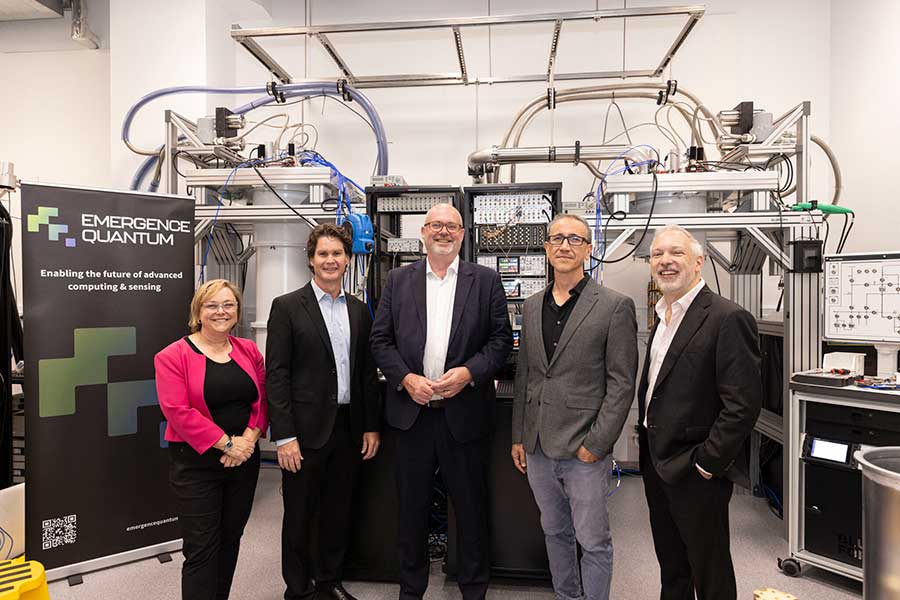
Away from the conference circuit, the Group welcomed Senator the Hon Tim Ayres, Australian Minister for Industry and Innovation and Minister for Science, to the Quantum Nanoscience Labs. Group members and Emergence Quantum founders Prof David Reilly and Prof Thomas Ohki discussed how quantum research breakthroughs are being translated for impact in industry. You can read more about the visit here.
MARCH 2026
March brought further opportunities to present the Group’s research, with members speaking at the APS March Meeting – one of the major international conferences in the field.
- PhD candidates Aislin Wells and Dan Osgood (SQCL) gave talks on Tailoring the Noise Structure of Fluxonium-Based Erasure Qubits.
- PhD candidate Xanda Kolesnikow (QTG) gave a talk on Protected Measurements for Protected Superconducting Qubits.
- PhD candidate Gargi Tyagi (QIL) gave a talk on Hybrid Two-Mode Squeezing of Optical and Microwave Modes with Inbuilt Quantum Memory.
- Dr Yun Li (SQCL) gave a talk on Alternative Junction Oxides for Superconducting Qubits.
- Long-time Quantum Science Group collaborator Sebastian Pauka gave a presentation on Noise Processes Limiting Silicon Spin Qubit Performance up to 1 Kelvin.
Closer to home, Dr Xanthe Croot (SQCL) gave a public lecture in Adelaide on the 2025 Nobel Prize at the Australian Institute of Physics (SA Branch) Bronze Bragg Presentation evening.
APRIL 2026
The Group’s international research engagements continued in April, with members speaking at conferences and visiting research collaborators in Singapore and Switzerland.
The month began with a visit by Dr Xanthe Croot (SQCL) and PhD candidate Justin Jacobs (SQCL) to Prof. Yvonne Gao’s group at the National University of Singapore, where Xanthe gave a talk on Erasure Fluxonium.
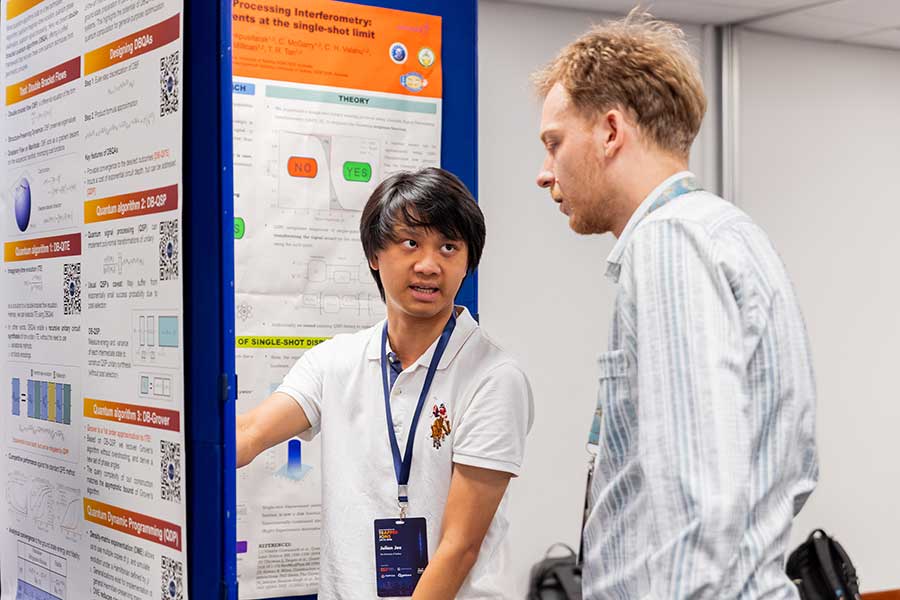
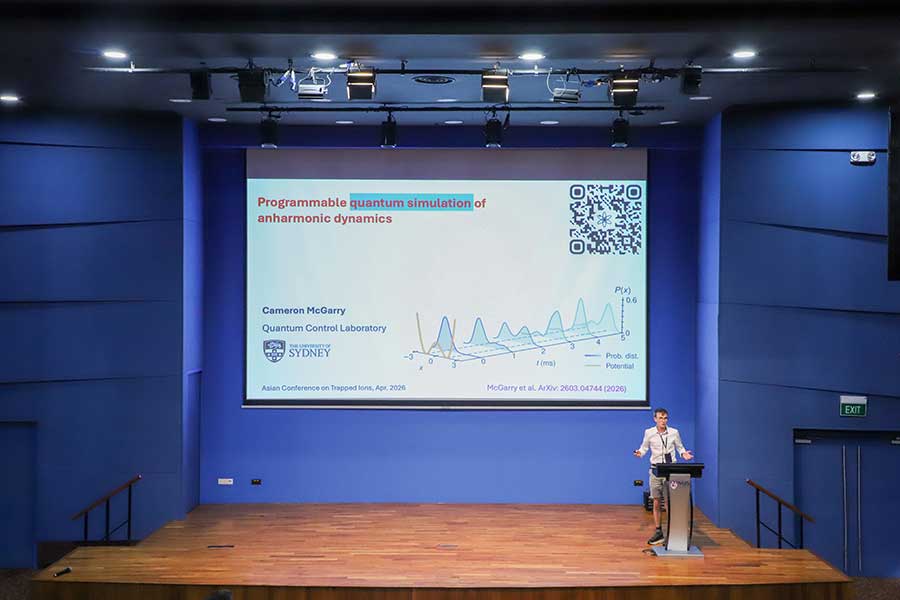
The National University of Singapore also hosted the Asian Conference on Trapped Ions (ACTI) 2026, where members of the Quantum Control Laboratory contributed talks and posters. Dr Cameron McGarry gave an invited talk on Programmable Quantum Simulation of Anharmonic Dynamics, while PhD candidates Frank Scuccimarra and Julian Jee presented posters on Quantum Signal Processing Interferometry: Detecting Rare Events at the Single-Shot Limit and Topological Spin Textures for Quantum Simulation in a Penning Trap, respectively.
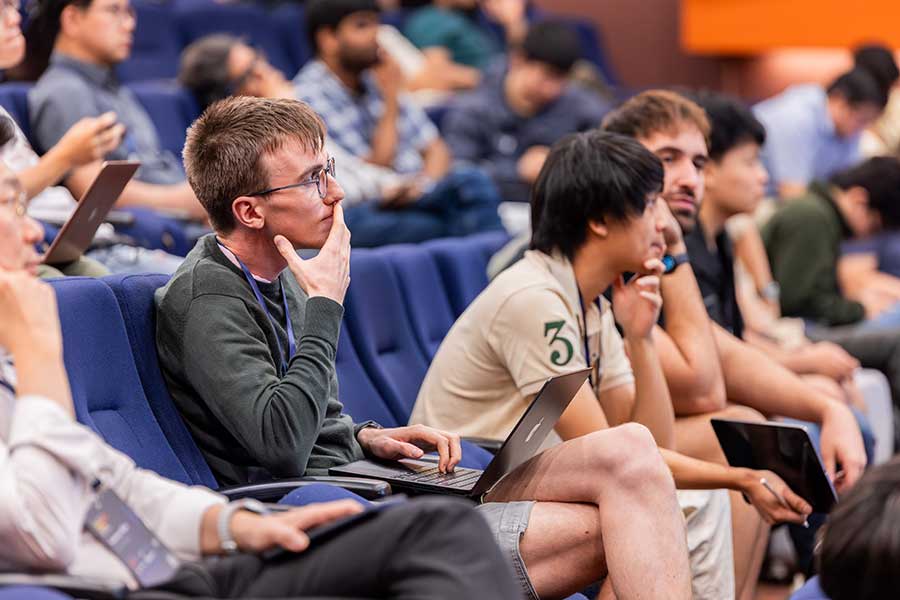
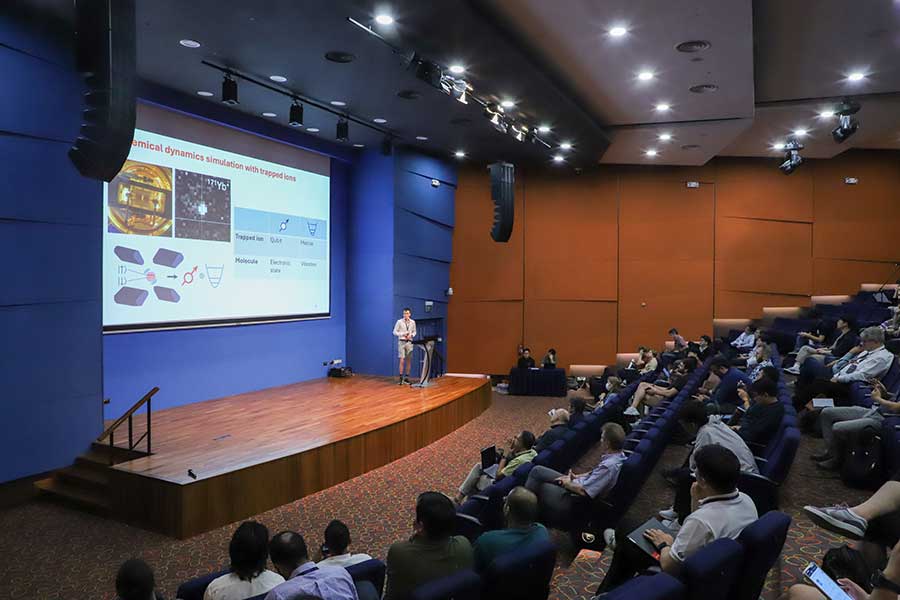


Also in Singapore, A/Prof John Bartholomew (QIL) gave a talk on Opportunities and Challenges for Rare-Earth Ion Quantum Networking Technology at the 5th Workshop for Quantum Repeaters and Networks (WQRN).
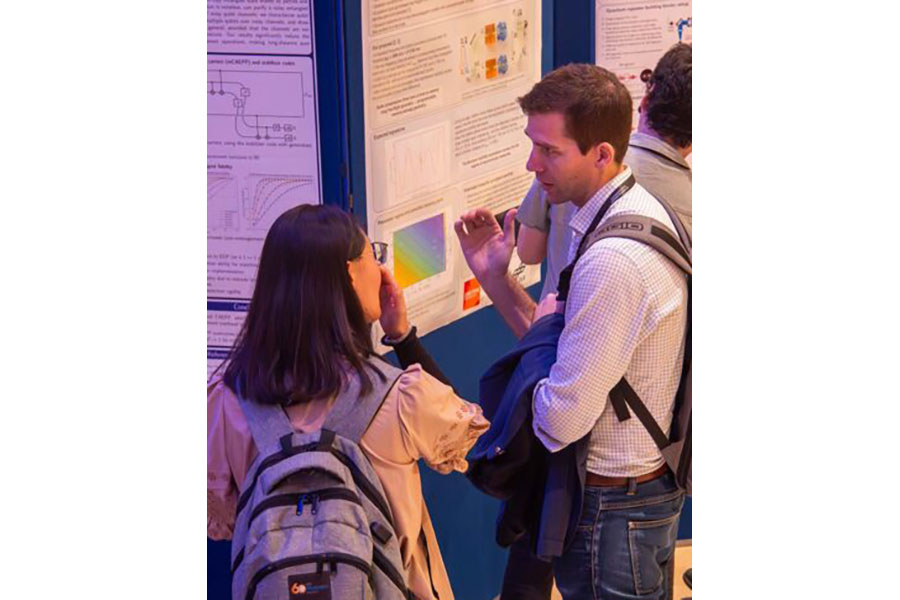
Meanwhile, in Ascona, Switzerland, several members contributed talks and posters at the Monte Verita Quantum Codes Conference.
- A/Prof Ting Rei Tan (QCL) gave a talk on Bosonic Quantum Signal Processing with Qubit-Oscillator System in a Trapped Ion.
- Dr Xanthe Croot (SQCL) presented a poster on Erasure Fluxonium.
- PhD candidate Stuart Nicholls (QTG) presented a poster on Tensor Product Code Concatenation in Measurement Based Quantum Computing.
- PhD candidate Xanda Kolesnikow (QTG) presented a poster on Protected Phase Gate for the 0-pi Qubit Using its Internal Modes.
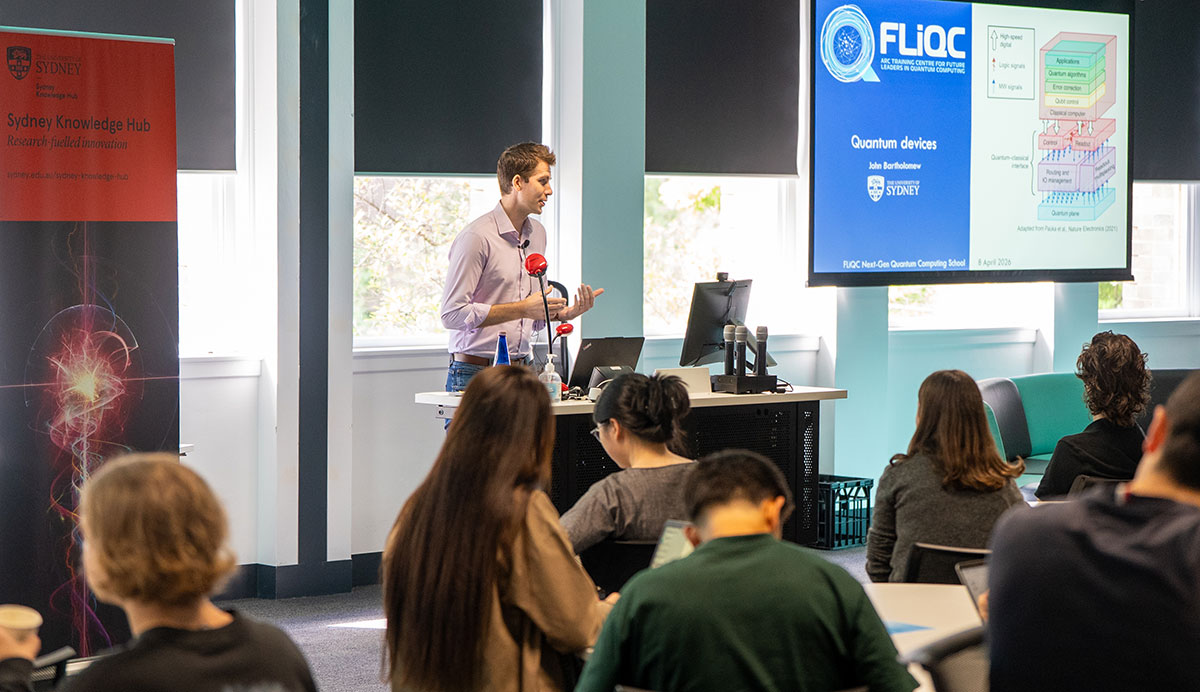
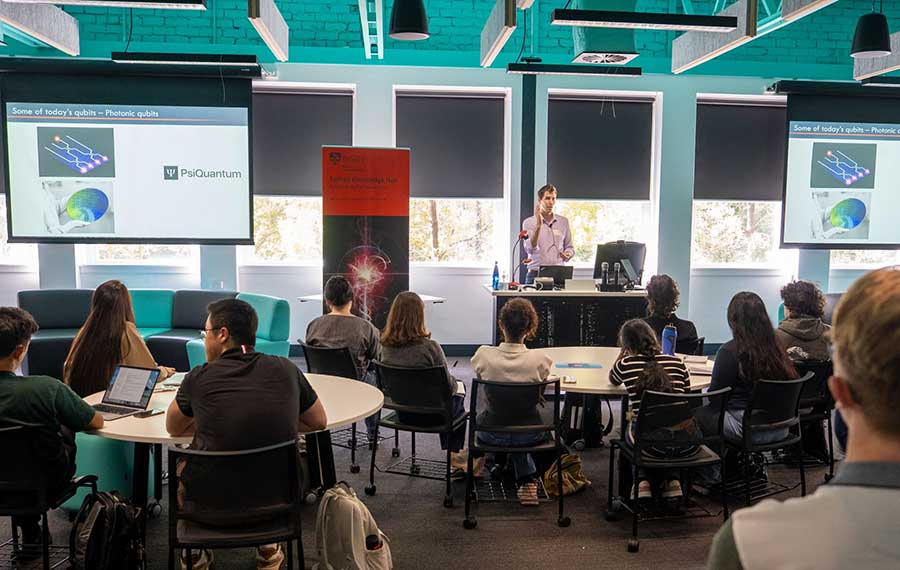
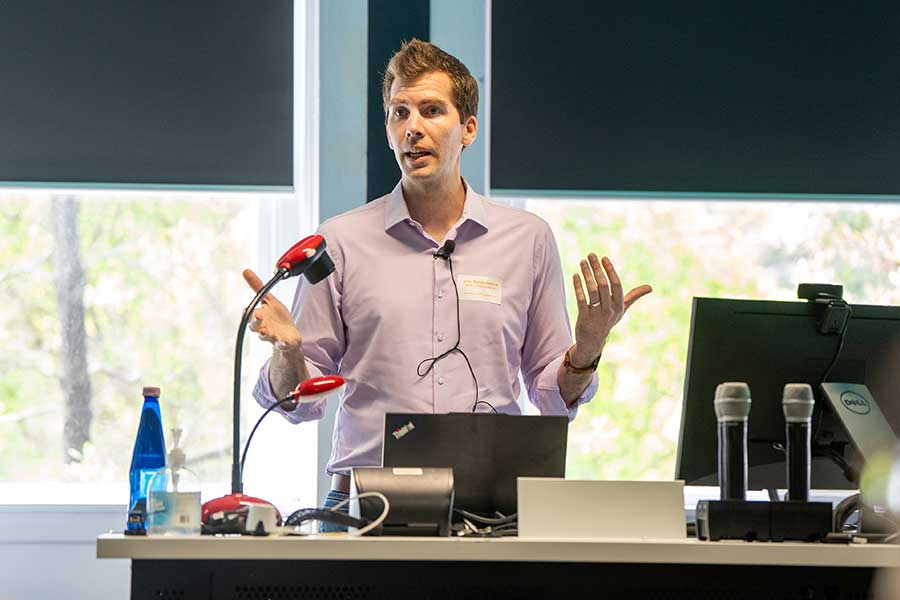
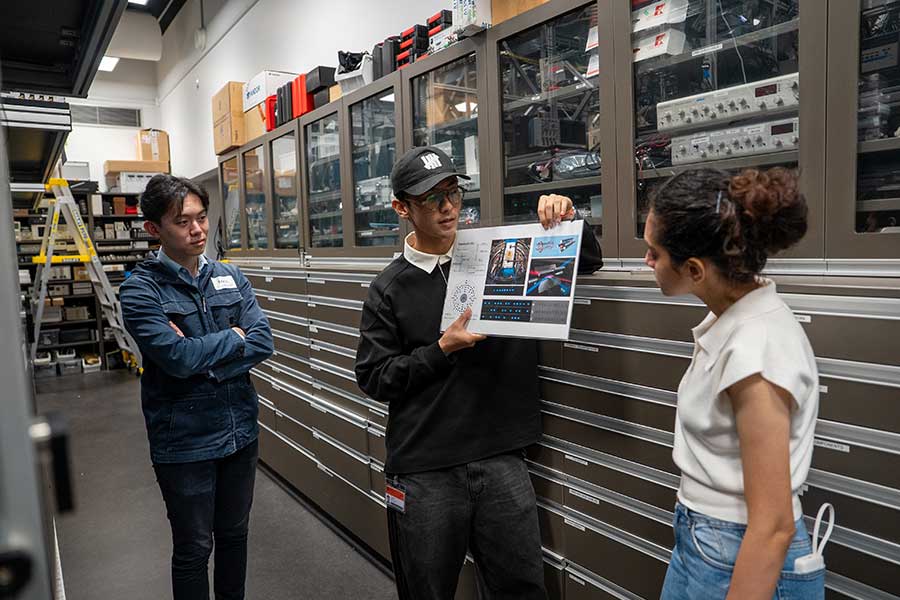
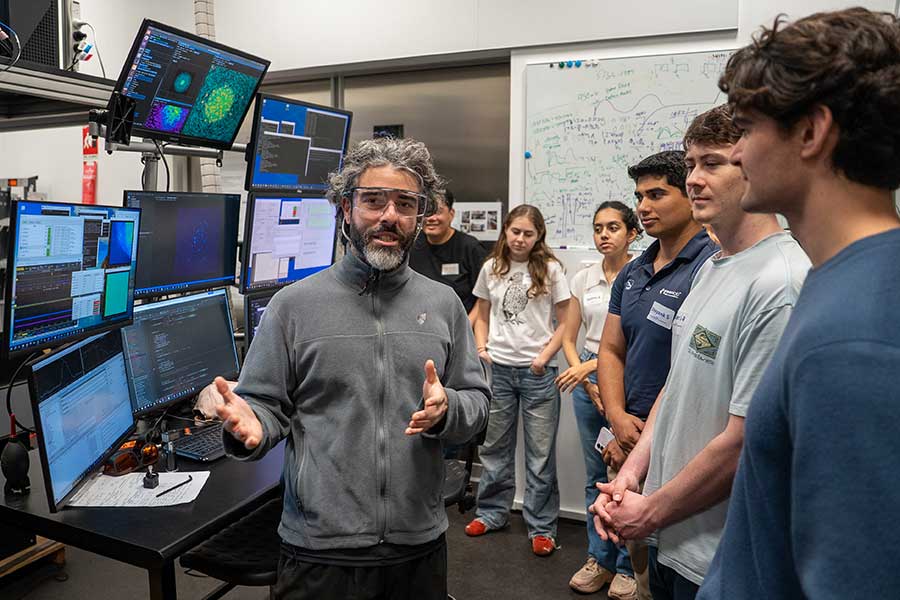
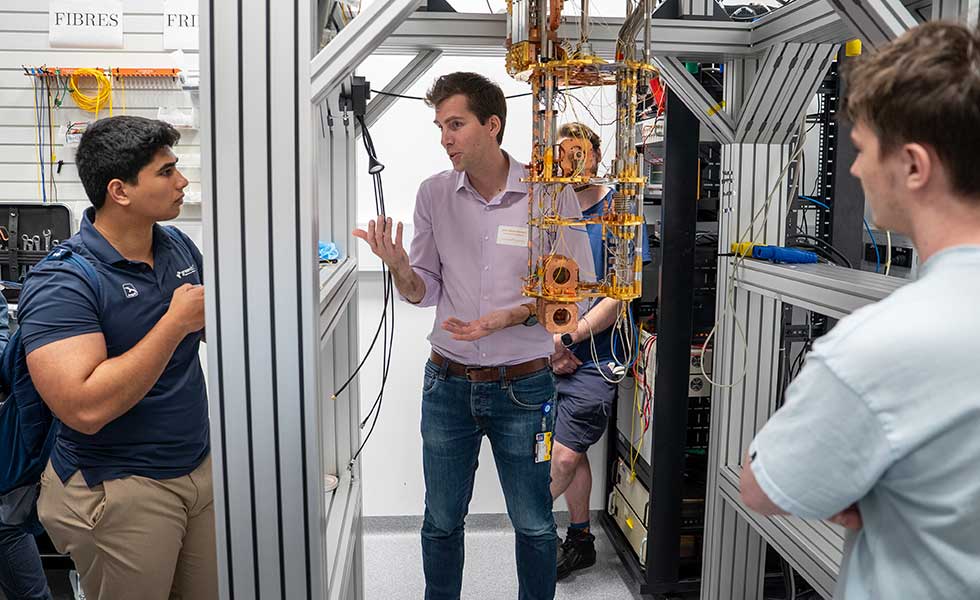
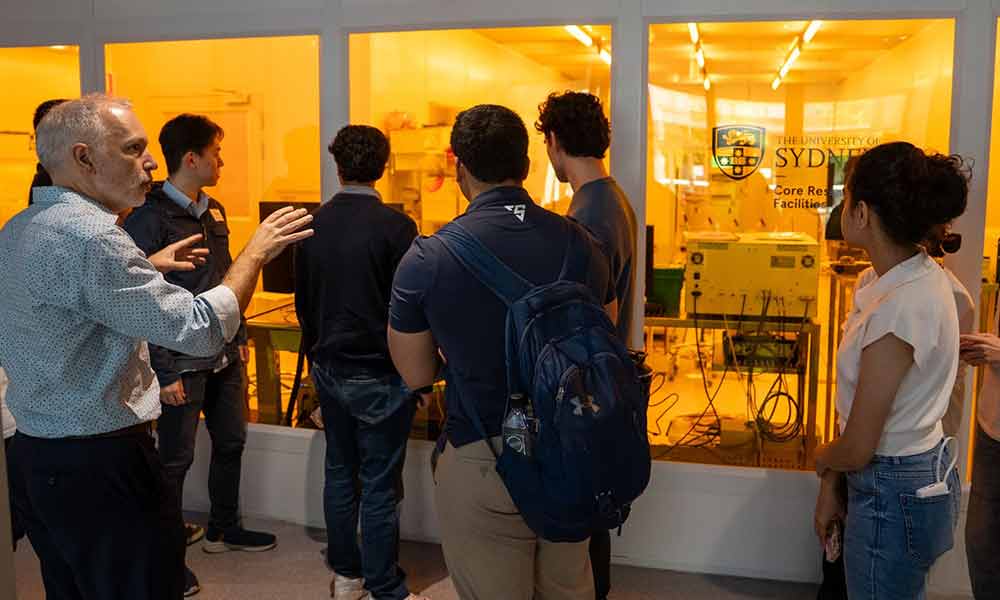
However, the Group’s activities in April went beyond conferences and research collaboration visits. Members of the Quantum Science Group participated in the inaugural FliQC Next-Gen Quantum Computing School, a two-day intensive program for undergraduate and Honours students interested in pursuing PhD pathways and careers in quantum. Prof Stephen Bartlett (QTG), Prof Andrew Doherty (QTG) and A/Prof John Bartholomew (QIL) gave talks and presentations, while A/Prof John Bartholomew, A/Prof Ting Rei Tan (QCL) and their PhD candidates led laboratory tours. PhD candidates also participated in panel discussions, answering questions and sharing their experiences as students. You can watch a feature video here.
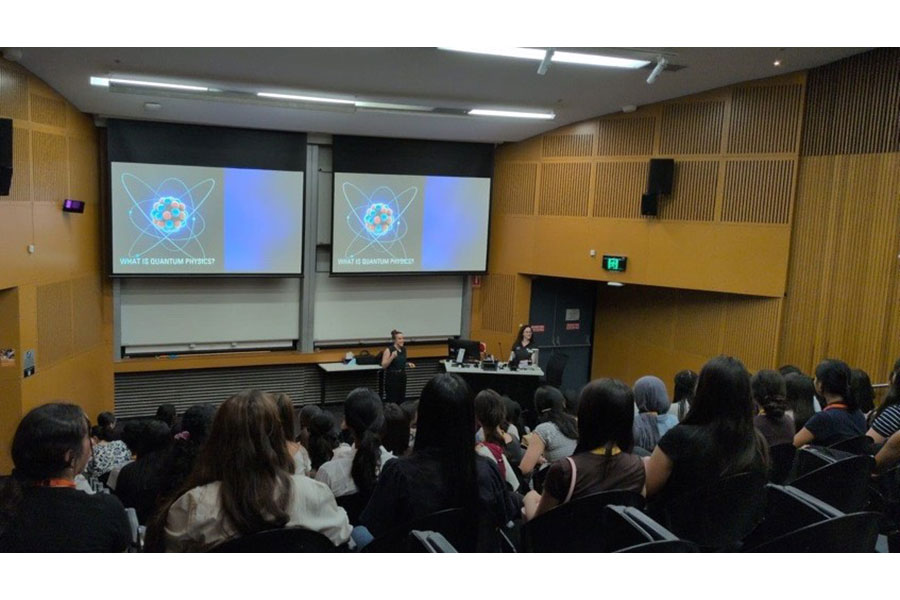
The Group also contributed to programs supporting the next generation of researchers, with Dr Xanthe Croot (SQCL) joining the Khuda Program – Women in STEM Academy as an academic mentor. Over six months, Xanthe will lead a group of Year 11 students at a program partner school through a quantum-related research project, as they create a solution to a real-world challenge.
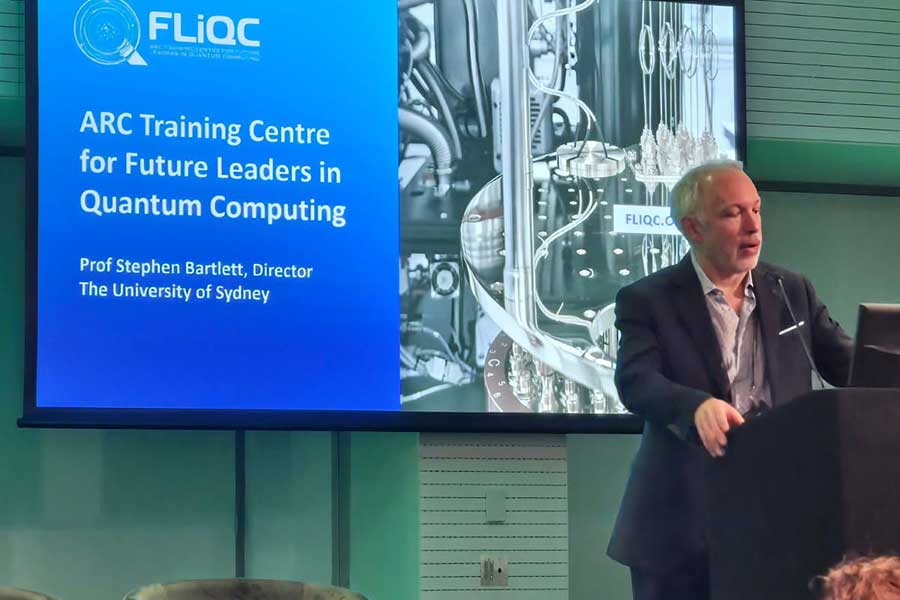
This focus on developing the next generation of quantum researchers also featured in broader discussions at the Quantum Australia 2026 Conference, where Prof Stephen Bartlett Prof Stephen Bartlett (QTG) contributed to a discussion on the role of ARC Centres of Excellence and Training Centres in building a quantum-ready workforce. You can read more here.
MAY 2026
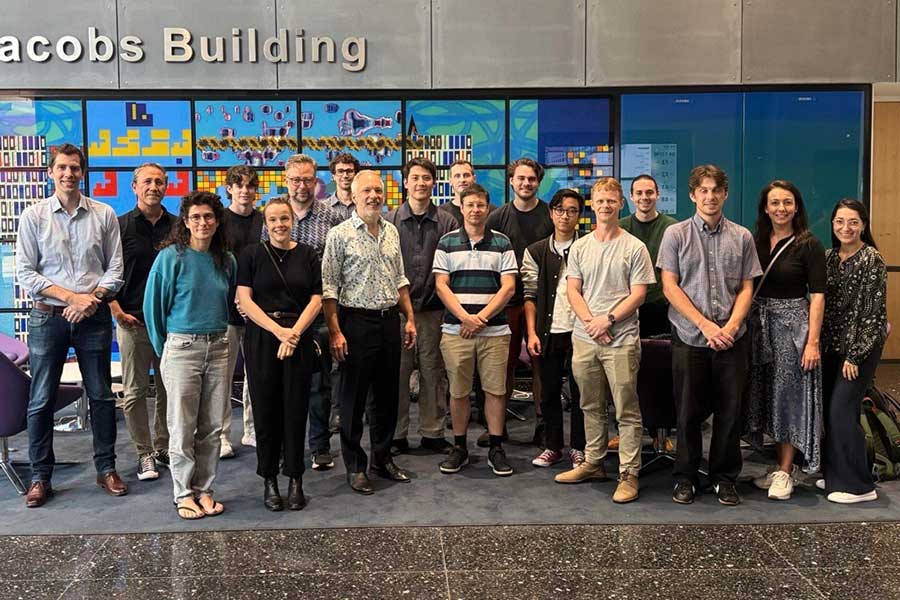
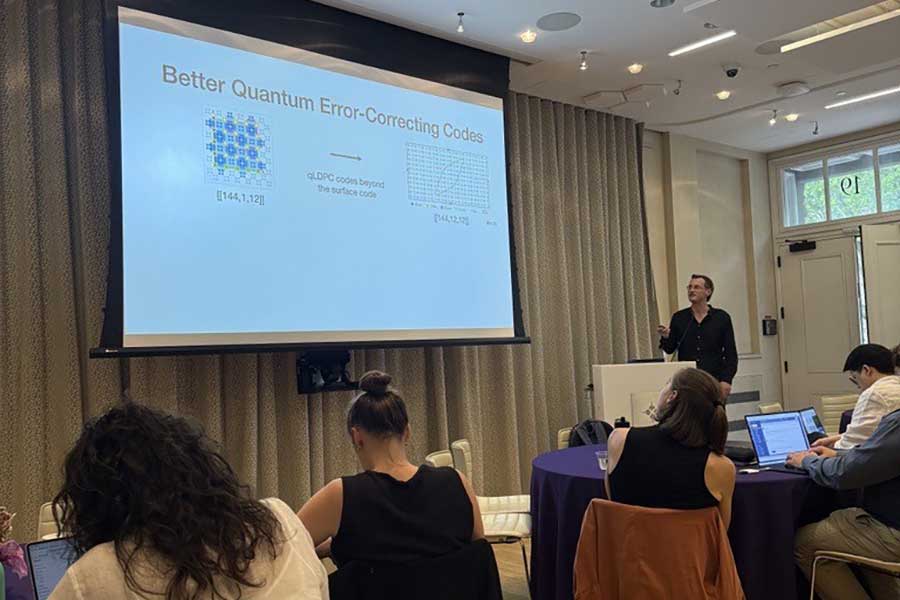
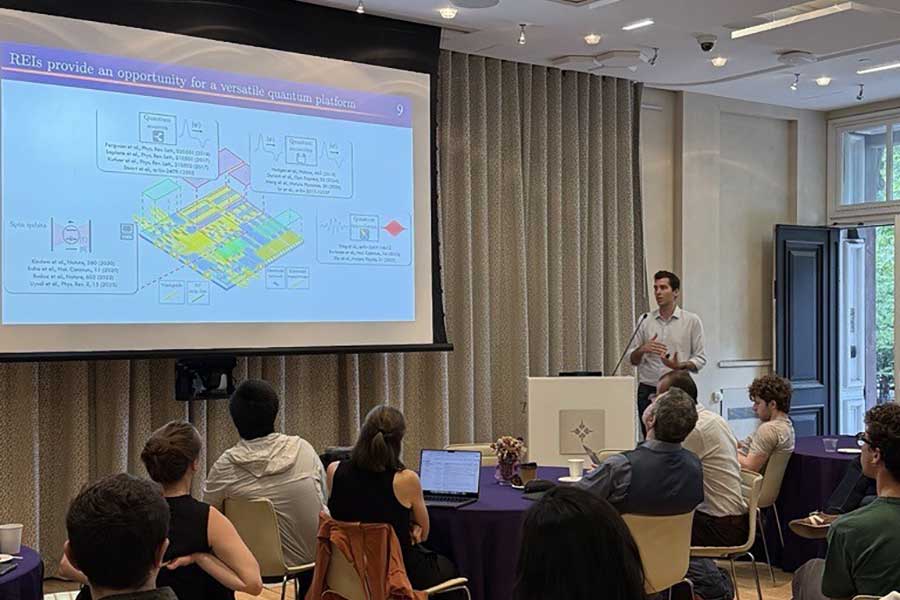
International collaboration remained a focus in May, when members of the Quantum Science Group visited New York University as part of a new research cooperation agreement between the Sydney Nano Institute (University of Sydney) and New York University. The partnership was established in 2025 to strengthen institutional ties and foster greater research collaboration.
Among those who participated in the visit were Prof Stephen Bartlett (QTG), A/Prof John Bartholomew (QIL), Dr Milos Rancic (QIL), Prof Andrew Doherty (QTG), Dr Xanthe Croot (SQCL), Dr Dominic Williamson (QTG), A/Prof Ting Rei Tan (QCL), Prof Tom Ohki and Dr Brendan Harlech-Jones (QNL), as well as a large number of HDR students in the Quantum Science Group.
JUNE 2026
The Group’s international conference activity continued in June, with several Theory Group members invited to speak at the Quantum Error Correction Conference in California from 7–12 June 2026. Dr Dominic Williamson (QTG) gave a talk on Partial Self-Correction in Layer Codes, whilst PhD candidate Lucas English (QTG) gave a talk on Ising on the Donut: Regimes of Topological Quantum Error Correction from Statistical Mechanics
The conference also featured several other research papers co-authored by Theory Group members:
- Scalable Quantum Error Correction Tailored for a Heavy-Hex Qubit Array Seok-Hyung Lee, Xanda Kolesnikow, Jun Zen Chen, Evan Hockings, Campbell McLauchlan, Georgia Nixon, Tom Scruby, Stephen Bartlett, Robin Harper and Ben Brown
- Fast and Fault-Tolerant Logical Measurements: Auxiliary Hypergraphs and Transversal Surgery K. Chang, A. Cowtan, Z. He, T. Jochym-O’Connor, D. J. Williamson, T. J. Yoder, & G. Zhu
- Quantum Weight Reduction with Layer Codes A. C. Yuan, N. Baspin, & D. J. Williamson.
Elsewhere in the US, PhD candidate Nihar Makadia (QCL) presented a talk on Single-Ion Addressing of Fast-Rotating 2D Ion Crystals for Quantum Simulation at the 57th Annual Meeting of the APS Division of Atomic, Molecular and Optical Physics (DAMOP) on Rhode Island.
The Group’s international engagements continued in Europe, with Dr Christophe Valahu attending the 75th Lindau Nobel Laureate Meeting in Germany, where he joined three physics Laureates – Michel H. Devoret, John M. Martinis and William D. Phillips – in a panel discussion on the future impact of quantum computing. You can watch the recording of the panel discussion here.
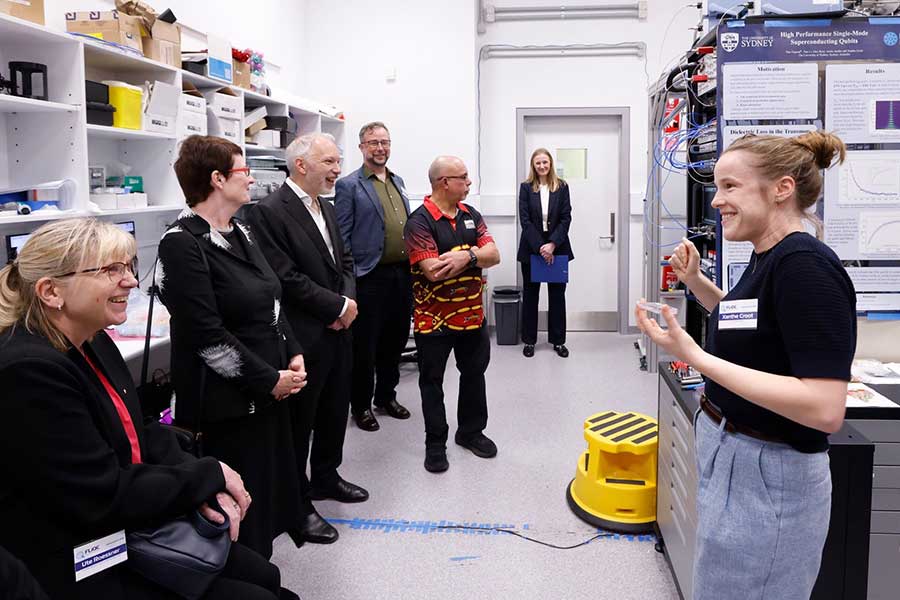
Back in Sydney, June also saw the official launch of the ARC Training Centre for Future Leaders in Quantum Computing (FLiQC) at the University of Sydney on 9–10 June. The two-day launch featured remarks by FLiQC Centre Director Prof Stephen Bartlett, along with laboratory tours led by Dr Xanthe Croot and A/Prof John Bartholomew.
It has been a busy six months for the Quantum Science Group, and there is plenty more to come. With further research, collaboration and engagement planned for the second half of the year, we look forward to building on this work in the months ahead.